

Why Ireland's Relationship with the USA really matters to Ireland
Happy St Patricks day!

You can see it on the national balance sheet. The Irish State no longer funds itself by taxing the productive activity of its citizens, or even by taxing the productive activity of actual companies, but by skimming a percentage off the top of an accounting hallucination dreamt up in California and Dublin.
We’re told this is success. Ireland, once poor, once emigrant, now a gleaming hub of global capital; the free market’s fairy story, with pints of stout. But peel back the PR jargon, the TED talks and LinkedIn posts about “talent” and “ecosystems”, and what you actually have is a small, peripheral state that has allowed itself to become a fiscal appendage of the United States. A kind of offshore pantry in which Washington stores its companies’ profits until it is ready to eat them.
The numbers are stark. Foreign multinationals, mostly American, paid about 88% of all Irish corporate tax in 2024, with just the top ten firms supplying 57% of receipts. Within that, three US giants alone accounted for roughly 46% of all corporate tax in 2024, around €13 billion of €28.1 billion. Corporate tax itself has swollen from roughly €4.6 billion in 2014 to about €28 billion a decade later. The Irish Fiscal Advisory Council estimates that roughly three‑quarters of corporation tax is paid by large US multinationals. Ireland’s exposure is not just fiscal but structural. US‑owned multinationals directly employ around 11% of the Irish workforce, with many more jobs in legal, accounting and local services depending on their presence. Roughly a third of Irish goods exports go to the US, dominated by high‑value pharma and tech products tied to these same firms.
The government insists, in that dull, managerial tone it reserves for talking about looming catastrophe, that this inflow of corporate tax is “welcome but volatile”, “windfall not permanent”, like a surprise inheritance from a rich uncle with a history of drunk driving. And yet it continues to spend the money as if it were a never-ending supply of free money. Year after year, budgets are padded, promises are made, and long‑term spending is built on a tax base that depends on the continued indulgence of a handful of American CFOs and whatever mood capricious US president wakes up in. It’s like funding your mortgage with casino winnings and then solemnly explaining that, yes, obviously, you know it’s risky, but the auld blackjack has been going very well lately.
This isn’t a symbiotic relationship; it’s dependency. Ireland likes to imagine itself as the nimble seducer of global capital, luring multinationals with low taxes and English‑language vibes. In reality, it’s the client in a client–patron relationship, nervously watching the other party’s face for signs of boredom or anger. Every time Congress or the E.U. mutters about global minimum tax, every time some White House staffer says the word “offshoring” in a disapproving tone, the Irish Department of Finance starts to get panic attacks. Entire departments exist within the department essentially to read the tea leaves of whatever U.S. tax policy Trump has dreamt up and report back on whether we’re going to have to have a grown-up national conversation on fiscal responsibility.
The ideological cover story is that all this is “FDI‑led growth”. What an elegant phrase for “we put the tax code in fishnets and worked the street until something in a polo shirt and pair of chinos pulled over.” The Irish economy has been remodelled into a kind of industrial park for US capital, a safe space for profits fleeing democratic oversight back home. Intellectual property, this disembodied, spectral wealth, is teleported into Irish subsidiaries; cosmic sums of money swirl through multinational accounts in Dublin and Cork; and the State takes a tiny cut, like a dealer in a rigged casino. This is called “competitiveness”. We are meant to go home, look in the mirror and applaud ourselves.
And because the sums are so obscene, the country starts to believe its own lie. The GDP figures balloon into the realm of fantasy; commentators start comparing Ireland, a damp archipelago with a housing crisis so baroque it verges on performance art, to economic superpowers. Politicians boast about surpluses and “fiscal space” as though this were the product of some native genius, rather than the good fortune of having parked ourselves at a profitable kink in the plumbing of global tax arbitrage.
There is something a little humiliating in this. Not the humiliation of poverty, that at least can be dignified, but the humiliation of willing vassalage. The humiliation of reorganising your entire tax system, your industrial strategy, your very sense of national self-worth around the needs of a few foreign companies and the sensibilities of a foreign treasury. Irish public life has been colonised by the idea that “what’s good for US multinationals is good for Ireland”, in the same way imperial administrators once insisted that what was good for London was good for Dublin.
Look at the structure of the Exchequer returns, and you see a country that has effectively outsourced its fiscal autonomy. When three firms can, by a tweak in their internal booking of profits, erase billions from the State’s tax receipts, what you have is not a democratically controlled fiscal system but a revenue stream contingent on external corporate whim. When Washington can, by adjusting its own tax code, make or break that revenue stream, what you have is not independence but a suspended sentence.
And it’s not just the money. The whole domestic economy is bent around servicing this arrangement. A big chunk of the country’s most highly educated workers are employed in what are essentially branch offices of US corporations, local nodes in global structures over which Ireland has precisely zero strategic control. Around them grows an ecosystem of law firms, accountants, consultants, and boutique PR outfits whose core function is to keep the plates spinning: to ensure the flows of profit continue to pass through Irish jurisdiction, to interpret every international reform as an opportunity rather than the clear rebuke it is.
Meanwhile, in the indigenous economy, small firms, regional industries, and actual productive capacity rooted in place sit crouched in the shadow of this giant, distorted edifice. Why build complex, long‑term industrial policy when you can simply rely on Apple and friends to show up with their tax‑optimised billions? Reality becomes something that happens to other countries. Ireland lives inside an accounting trick.
The horror is that everyone knows. The Irish Fiscal Advisory Council and every respectable think‑tank in the land have been running around with their heads on fire, warning of “concentration risk”, begging governments to treat corporate tax receipts as windfall, to salt them away, to build buffers. The advice is duly acknowledged, filleted into a press release, and then quietly drowned in the foam of the next budget day amuse-bouche for special interest groups. No one wants to be the minister who tells voters that the party is funded by a foreign bar tab and it might be cut off at any moment.
Beneath the charts and the cautious language, the basic dynamic is brutishly simple. Ireland is a cog in America’s economic machinery. For as long as that machinery needs us, an English‑speaking, EU‑member, low‑tax gateway, we get showered with gold. But all that glitters is not gold. The moment the design changes, we will discover that our celebrated “model” was a precarious little platform attached to the side of a leviathan, and the bolts were always provisional.
What would an adult country do? It would separate these receipts, save most of them, and fund day‑to‑day spending from taxes tied to the real domestic economy. It would use the breathing‑space to build an indigenous productive base not eternally dependent on the grace and favour of Silicon Valley. It would accept slower headline growth in exchange for actual fiscal sovereignty. Instead, we have a politics that behaves as if this dependence is destiny. As if Ireland is naturally suited to be the world’s polite bookkeeper, a cheerful intermediary between American capital and European regulation. It is the mentality of a service corridor: we don’t own the restaurant, we carry the plates. We are not expected to have opinions, only to be “stable” and “predictable” and “business‑friendly”, a country whose primary emotional register is gratitude.
The irony is that the American companies themselves have no such loyalty. They are not friends; they are not partners in some romantic entanglement across the Atlantic. They are machines for maximising shareholder value, and they will disassemble Ireland and move it somewhere else the moment the numbers tell them to. At that point, we will discover how much of our supposed prosperity was actually just someone else’s tax avoidance scheme. You look at the pharma plants, and the tech offices, all that chrome and glass serenity, and you realise the machines aren’t really part of the building, they’re just bolted to the floor and can be moved anywhere in the world at the flick of a CFO’s wrist.
If Ireland wants to be more than a glorified annex to the US tax code, it has to start by admitting what it is now: over‑reliant, over‑exposed, and politically addicted to the easy money of foreign profits.
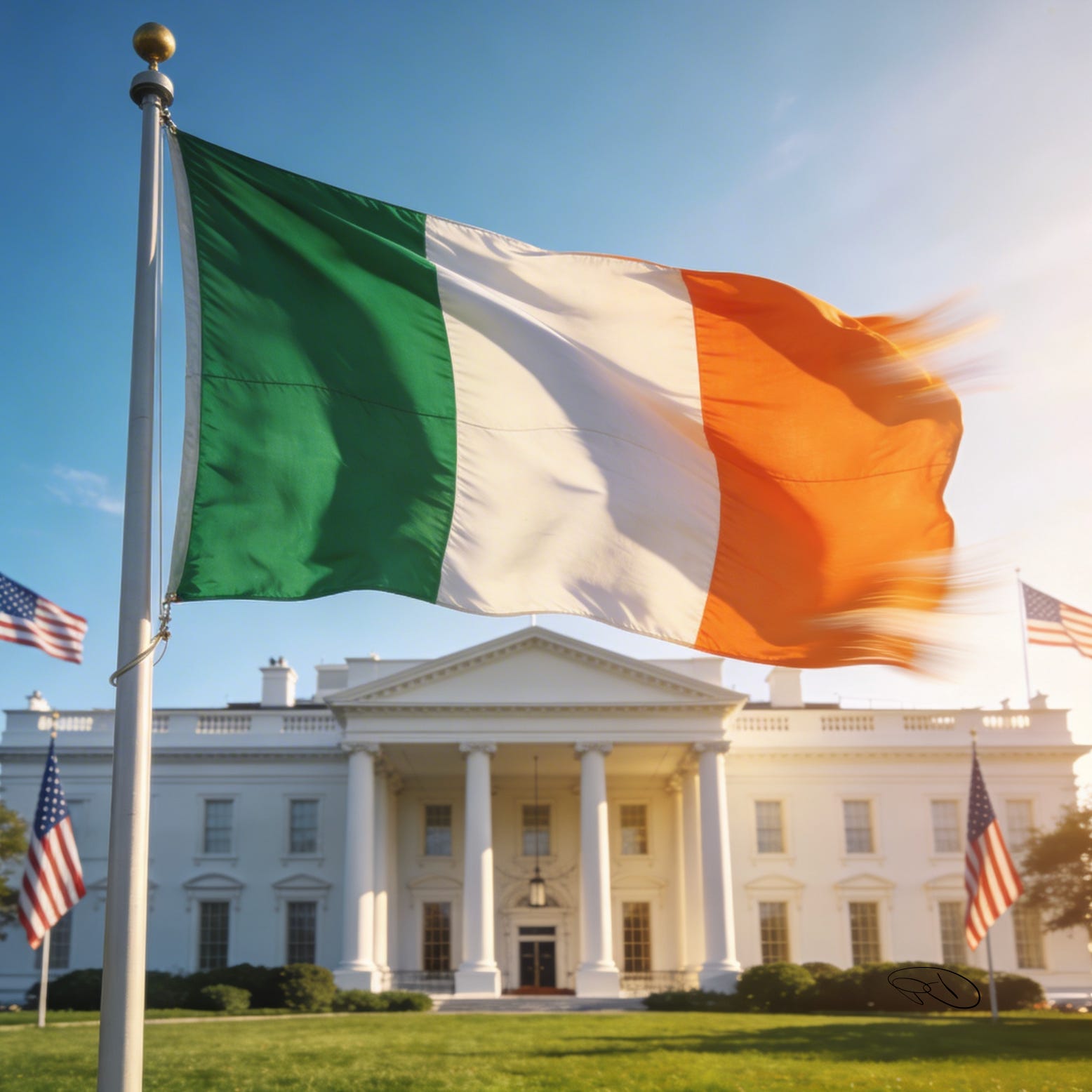
Would any country taking in the amount of cash that Ireland sucks in from the U.S.A do anything differently? Probably not. When a superpower backs a truck up to your front door and starts shovelling in cash, you don’t lecture it on values, you offer to carry the smaller bundles yourself. The truth is, most countries would happily dress up in green and juggle shamrocks on Pennsylvania Avenue for a fraction of what Ireland takes from American multinationals. Principles are lovely in theory, but Ireland is now Europe’s second-most expensive country, with consumer prices 38% above the EU average, childcare +58%, and some of the most expensive housing in the world. Government expenditure growth is the highest in the EU through 2030, with net spending rising 7.1% annually, double the rate of other European countries, fuelled by corporation tax windfalls. No other country would do it differently; they’d just be less preachy about the hypocrisy. And when the next crash comes, and it will come, Ireland will be hit harder than most, but the first people complaining about the Taoiseach’s visit to the White House to prostrate himself at the altar of American capitalism will also be the same people complaining they’ve lost their jobs because the Taoiseach didn’t do enough. There’s a word for that.
Happy St. Patrick’s Day!
The St Patrick’s Day visit of the Irish Taoiseach to the White House grew from a small diplomatic gesture in the 1950s into a set-piece of the transatlantic political calendar by the 1990s.
In 1952, Irish ambassador John Hearne presented a simple box of shamrock to US President Harry Truman. In 1956 taoiseach John A. Costello became the first Irish head of government to mark St Patrick’s Day with a meeting at the White House, creating the basic template of a symbolic, Irish-themed photo opportunity at the heart of American power. Through the 1960s and 1970s, the shamrock ritual usually involved the Irish ambassador, with the taoiseach only occasionally appearing, and no guarantee of a serious political meeting with the president. Under Ronald Reagan in the early 1980s, the tradition was upgraded, with Reagan personally receiving a shamrock and later inviting Garret FitzGerald and Charles Haughey to the White House for St Patrick’s events.
By the 1990s, particularly under Bill Clinton, the St Patrick’s Day encounter had hardened into an annual summit between the president and taoiseach, framed around a formal shamrock presentation, Oval Office talks and a high-profile Irish presence on Capitol Hill. Clinton’s focus on Northern Ireland elevated the day from soft-diplomatic ritual to a regular opportunity to signal US engagement with the peace process.
Since then, successive Taoisigh – John Bruton, Bertie Ahern, Brian Cowen, Enda Kenny, Leo Varadkar and Micheál Martin – have made the mid-March homage to Washington almost every year, with only disruptions such as the Covid pandemic forcing virtual meetings. In the 21st century, the “bowl of shamrock” ceremony has doubled as an annual stock-take of US–Irish relations and a platform for both governments to talk about issues from trade to Northern Ireland and wider foreign policy. Ireland supplies the quaintness, America supplies the power, and everyone pretends this is an exchange of equals rather than a vassal presenting herbs at court.
Under Clinton or Obama, St Patrick’s Day in Washington was a stage-managed affirmation of the “special relationship”; under Trump, it is a tightrope between angering a capricious superpower and looking like a supplicant who will endure anything for access and investment. The whole ceremony exposes the basic contradiction: Ireland insists it is a principled, rights‑talking state, yet its most visible diplomatic moment each year is now an awkward, televised deference to a president large parts of Irish society openly despise.
Every year, St. Patrick has become best marketed saint in Christianity, in no small part, thanks to Ireland’s diplomats, and every year, the Department of Foreign Affairs releases a video to celebrate Ireland and its Irish diaspora.
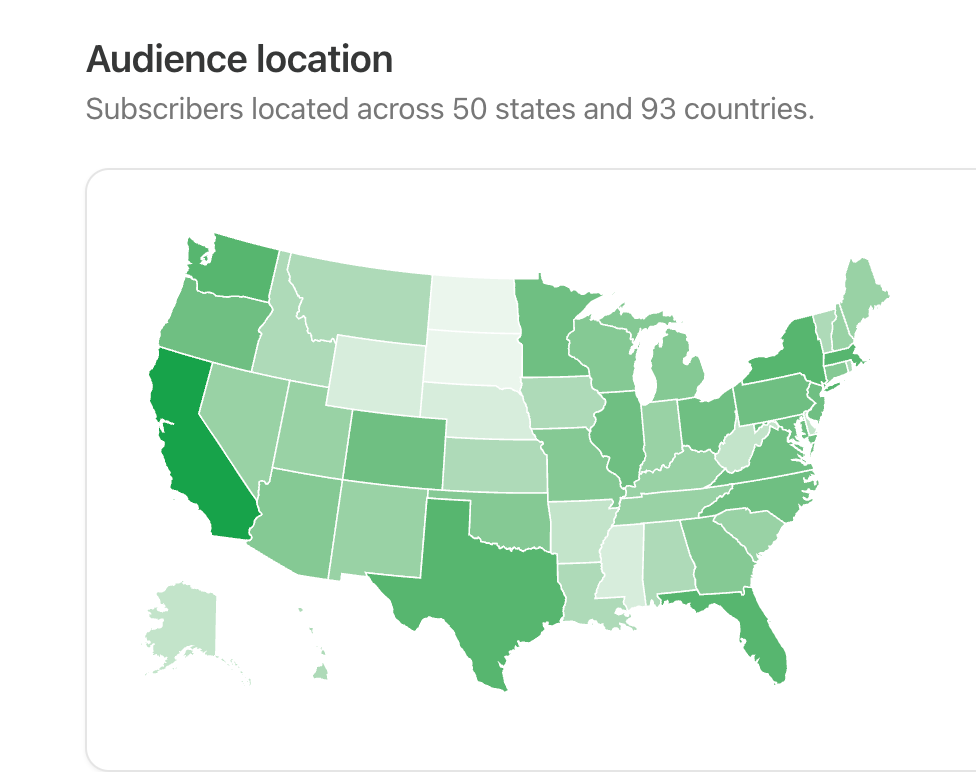
Lá Fhéile Pádraig sona daoibh to my subscribers in all 50 of the great United States and 93 other countries.
We here in Canada have been feeding on the fiscal teats of the US ,as we are joined at the hip; but lately it has soured and is hard to digest. We are rigoursly pursuing other arrangements to avoid being sucked down their current rabbit hole. We could really use some Irish products ( I'd love to get some Irish butter at a reasonable price😁) . Hopefully our PM Carney ( an Irish descendant!) will visit Dublin soon .😏🇨🇦😎
Tull,this is another excellent summary.Thank you and SLAINTE! Wishing a memorable and pleasant St.Patricks Day to you & all here.The time seems to be suddenly whizzing by...The clocks go forward Sunday WEEK and Sunday FORTNIGHT it's Easter Sunday ! How to keep up?! ☘️🏆