
Pro-Palestine on the Streets, F-35'S between the sheets.
Sinn Féin enabling the building of Israels F-35 fighter jets

Some men, and let’s not forget women, will torch their entire political inheritance, party card, comrades, carefully cultivated aura of moral certainty, for the sake of a single glittering principle that has lodged itself in their chest like shrapnel from an F-35 laser-guided missile. They walk out into the wilderness, voices hoarse from denouncing what they once adored, convinced that the truth is worth the exile. History remembers them, usually with a mixture of admiration and mild embarrassment, the way one might remember an uncle who took his Trotskyism rather too seriously.
Most politicians, however, the vast, comfortable majority, do something far more disingenuous and sensible. They discover that political principles are surprisingly flexible things, like ligaments that stretch further than you’d think under the right pressure. A little career opportunity here, a ministerial car there, the warm approval of the media, and suddenly yesterday’s non-negotiable becomes today’s regrettable necessity, best understood in context, you see. The rhetoric is quietly laundered. The betrayals are rebranded as maturity, and one learns to pronounce pragmatism with the same pious inflexion once reserved for Sinn Féin’s musings on geopolitical events.
In the absurd theatre of Sinn Féin’s revolutionary postures, where every keffiyeh is a costume and every slogan a sales pitch for its website merch, Sinn Féin has once again demonstrated the exquisite art of talking out of both sides of its mouth on both sides of the border. These are the self-appointed guardians of Irish Republicanism, the party that drapes itself in the banner of those oppressed by Western imperialism, chanting against occupation and bombings while quietly signing off on the machinery that enables it. Political hypocrisy, that tired old gal, has rarely looked so well-fed.
To most Irish people, Castledawson is a geographical or literary footnote, the quiet satellite village of Magherafelt hovering in the penumbra of Seamus Heaney’s childhood. Nobel Prize-winner, poet, playwright, excavator of turf and trauma: Heaney, that great digger of the soul’s hypocrisy, a man who could make the act of remembering feel like a moral accusation. He wrote as if the earth itself were complicit in our betrayals - every furrow a lie we told ourselves about belonging, every syllable of moss and silt freighted with the knowledge that we are never quite who we claim to be. In Castledawson’s shadow, he learned that the self is mostly peat: dark, wet, and liable to preserve the evidence of its own crimes for centuries. The memories of The Troubles will bear testament to this, although you could drive through Castledawson without noticing the place at all, the way one might walk home after a few pints, not really noticing anything.
But behold: in the damp, usually unassuming fields of Heaney’s Mid Ulster, a factory churns out precision components for the F-35 fighter jet, a sleek, 100-million-dollar angel of death. It apparently has the most advanced sensor suite of any fighter jet in history. I have no idea what that means, but it sounds quite deadly. These are the same jets that scream over Gaza, Lebanon and Iran, all over the Middle East, turning buildings into lumps of concrete meshed with blood. Israel pilots them with the serene confidence of a people who believe their own press releases; they have something in common with Sinn Féin there. And Sinn Féin, oh, noble Sinn Féin, could not quite muster the revolutionary vigour to object to the extension of its local killing machine factory in Castledawson. The council’s 16-member planning committee voted to permit the enlargement of Moyola Precision Engineering, which makes components for the F-35 jet fighter. A combined total of three SDLP and Independents voted against the motion. The five DUP councillors, of course, voted for the plant. Seven Sinn Féin Councillors abstained, so the motion passed, jobs were “protected,” and the great wheel of political hypocrisy turned another inch. The pro-Palestine sentiment, it would appear, is strictly decorative: excellent for murals, marches, moral superiority on social media and shouting across the Dáil chamber. It’s rather less useful when it collides with the unglamorous business of Northern Irish employment statistics.
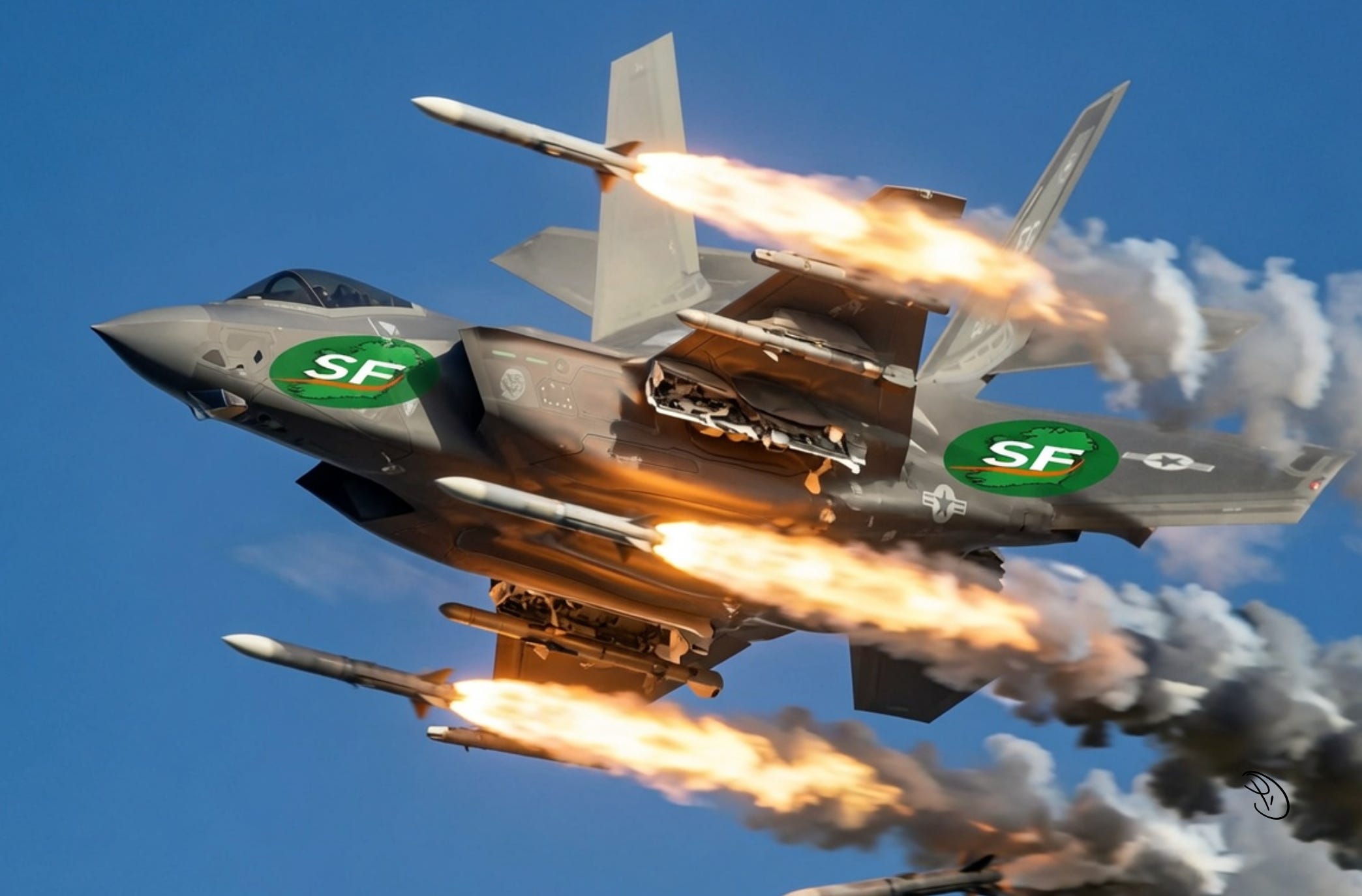
It is a quieter apostasy, almost genteel. No dramatic resignation letters, no lonely purity. Just the soft Sinn Féin surrender: the abstention where once there would have been at the very least some performative outrage, now there’s just careful silence where once there would have been fire and brimstone. The soul was not so much sold but gently repurposed, as you might an old whorehouse turned into luxury flats. And in the end, sure, the Sinn Féin politician will hardly notice the difference. One still believes, after all. Still believes in the cause, the United Ireland, ‘Up the Ra', the solidarity with whomever Israel is bombing. The Sinn Féin politician believes in being on the inside, where decisions are made, jobs are protected, and the terrible killing machinery of the world is at least made by the decent people who work in the surrounding areas.
Investigative news website, The Detail, has previously reported how Martin Butcher, Oxfam’s policy adviser on arms and conflict, said that the unique set-up of the F-35 programme means it is “absolutely” the case that parts produced in the UK – including Northern Ireland – would end up in Israeli jets. He said it is a certainty that components produced in the UK are going to Israel “either in new aircraft from the United States or as parts from a regional warehouse”.
This is the eternal comedy of Sinn Féin’s geopolitical posturing. Once upon a time, when Sinn Féin knew something about asymmetric warfare (well, their terrorist wing did) and the long, grinding hypocrisy of empires that preach peace while arming their favourites. Now they sit in Stormont, playing at governance, discovering that the Irish struggle was never meant to inconvenience Lockheed Martin or the delicate sensitivities of investment portfolios of billionaires. The factory produces components for war that kill the same people they claim to be advocating for; there’s a word for that. The parts slot neatly into American-made fuselages. The bombs fall, and children become statistics in Sinn Féin’s janus faced abstension. And somewhere in a mid-Ulster committee room, a councillor shrugs: sure, it’s only components, and they don’t go direct to Israel, but indirectly and think of the local lads with steady wages. It is the same familiar pseudo-liberal sleight of hand, repackaged in a tricolour. Gesture left, invest right. Condemn the Middle East wars in ringing prose, then facilitate the supply chain that keeps the planes in the air. The moral architecture of their mental gymnastics is impeccable: we are against the use of these machines for evil, you understand, but the manufacture is a regrettable economic necessity. One must be pragmatic. One must not alienate the Americans. One must remember that Palestine is very far away, and the Moyola Precision Engineering plant is right here, employing decent people who vote. How deliciously inconsistent and hypocritical. The same party that once dreamed of driving the British out now ensures that the instruments of distant slaughter remain a well-oiled part of the British economy. The revolution will not be televised but industrialised.
Sinn Féins crowning hypocrisy blooms elsewhere, in the softer political climes of the Republic, where Sinn Féin’s elected mouthpieces thunder from the Dáil against the Irish government’s failure to impose real sanctions on Israel. Sinn Féin TD Cathal Gould, in a moment of raw, unfiltered self-absorbed piety, declared that he hoped Benjamin Netanyahu would burn in hell. A satisfying image, no doubt: the old butcher roasting eternally on some Dantean spit, turning slowly above the flames he helped stoke. But one wonders whether the fire extends quite so generously to the mechanical enablers, those quiet facilitators of the machinery itself. Does hell have a special circle reserved for the seven Sinn Féin politicians on Mid Ulster Council who, faced with the chance to halt the expansion of a local factory churning out components for the F-35, chose the path of abstention, pragmatism, and a quiet nod to the continuation of business as usual instead?
Pearse Doherty, with the solemn gravity of a man reading his own obituary, declared that Ireland must not be complicit in genocide. In fairness, he didn’t specify which Ireland. The words landed like a stone into still water, clear, resonant, morally unimpeachable. He delivered them in the Dáil, voice steady, eyes fixed on some distant horizon of principle, the weight of Irish history and international law pressing nobly upon his shoulders. Ireland, he insisted, could not stand idly by while the machinery of extermination ground on in Gaza. Complicity was not an option. The Republic must act. How stirring it must have felt, that declaration. How perfectly calibrated for the evening news and the solidarity rallies. And yet, just across the border, in the unromantic precincts of Mid Ulster, the same party’s councillors found themselves strangely paralysed when the moment came to withhold complicity from something rather closer to home: a factory quietly extending its lease on the production of components for the very F-35s that make such efficient work of turning Middle Eastern neighbourhoods into rubble. Ireland must not be complicit, they say. And then, with a small shrug and an abstention, they ensure that it is. Granted, it’s Northern Ireland, but that’s where Sinn Féin are in government. Doherty can’t blame the seven Sinn Féin abstentions on “the Brits”.
It is a deliciously precise hypocrisy. Mary Lou McDonald, leader of the party, stands in the Republic’s parliment and demands that the Irish government impose real sanctions on Israel, boycotts, embargoes, the full ceremonial apparatus of righteous isolation. Her voice cauterwauls with moral urgency; the Dáil echoes with the sound of revolutionary theatre. Yet just over the border, in the damp committee rooms of the North, her own councillors cannot quite bring themselves to vote against the very components that keep those Israeli jets in the air. The killing machines are apparently exempt from sanction when they provide local jobs. One imagines the Israeli ambassador permitting himself a thin, knowing smile: how convenient, this partitioned conscience. South of the border, protests outside the embassy, keffiyehs and righteous chants; north of it, a gentle pat on the back from the Red Hand of Ulster, hoping the orders for F-35 parts keep flowing.
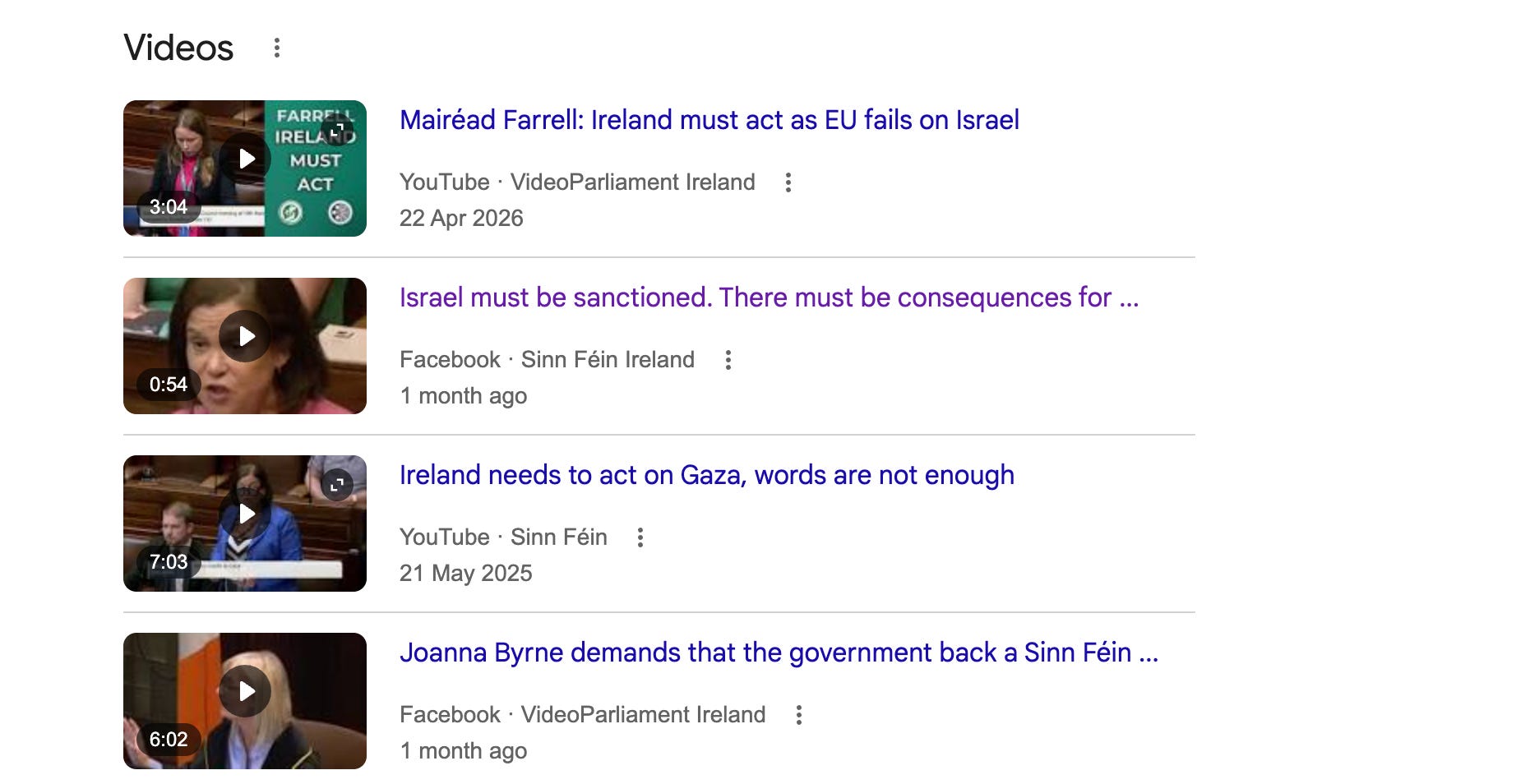
Sinn Féin demands boycotts, arms embargoes, the cancellation of the upcoming international soccer match with Israel, the full theatrical apparatus of moral isolation, as though the blood on Gaza’s streets had somehow stained their own hands by association. How stirring it all sounds from the opposition benches: principled, uncompromising, the authentic voice of Irish anti-imperialism reborn. The quiet expansion of an F-35 components factory in Castledawson is merely a regrettable fact of economic life. One half of the movement shakes its fist at Tel Aviv; the other half ensures the planes keep flying out of it. It is not inconsistency so much as a studied division of labour: performative rage in Dublin, pragmatic complicity in the North. The revolution, it seems, stops at the border, and even then, only when convenient.
A united Ireland, we are solemnly informed, would be a bastion of strict neutrality, an ancient Celtic Switzerland, unblemished by the grubby entanglements of faraway wars. No more would Irish soil feed the war machines of other countries; the Irish Republic would stand radiant and aloof, hands clean, voice pure, a moral exemplar for the ages. Yet one cannot help but notice the small print in this radiant prospectus. For the same party that demands Ireland remain strictly neutral in the Dáil, denouncing complicity, calling for sanctions, painting the government as war mongers and craven for its insufficient outrage, Sinn Féin quietly ensures, north of the border, that the components feeding Israel’s F-35 fighter jets keep flowing without interruption. A united Ireland, it seems, could be strictly neutral in the abstract, provided the factories stay open, the jobs remain protected, and the quiet patronage of the arms economy continues uninterrupted. In Mid-Ulster, it turns its cheek for Israel’s interests by default; in Leinster House, it votes for the performance of opposition to them. The border may one day vanish, but the sleight-of-hand is already seamless: neutrality for the cameras, supply chain for the balance sheet. Pro-Palestine between the sheets, F-35’s between the sheets. The thirty-two counties would simply inherit thirty-two different excuses.
Meanwhile, the keffiyeh stays draped over the microphone for the cameras. The dead across the Middle East do not get a say in how Sinn Féin votes on planning applications. They never do. This is not betrayal so much as revelation of sorts. The mask slips, and underneath there is only the same banal face of power: smiling, managerial, ever so slightly embarrassed, but fundamentally committed to keeping the killing machine running. Sinn Féin stands with Palestine, Iran, all the oppressed peoples of the world, they tell us, right up until the point where standing costs something tangible, then it stands with the quiet continuation of the murderous world as it is: the same world it lectures the rest of us about with such theatrical indignation and let’s be honest, rank hypocrisy and deceitfulness. Then again, Sinn Féin has always maintained an ambiguous relationship with bombs being used to kill people.
What a rant!